What is a Cracked Heat Exchanger?
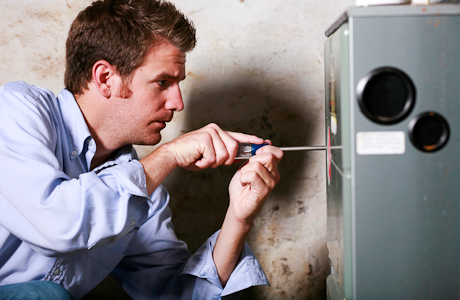 The heat exchanger in your furnace plays a vital role in warming your home to a comfortable temperature. Simply put, without the heat exchanger, your furnace would not be able to do its job. With that background, it’s easy to understand why a cracked heat exchanger would be a problem. But what does this component do, exactly and why would it crack? This article will dive into those questions and more.
If you need professional furnace repair in Burlington, NC for a great price, contact Berico today to make an appointment. Berico offers a knowledgeable team of friendly experts who will get your system back up and running right away.
Understanding a Cracked Heat Exchanger
A cracked heat exchanger is a unit that has developed a crack large enough to interfere with normal, safe operation. When the heat exchanger becomes cracked, it is likely that the flame within the unit will struggle to remain lit, or will flutter significantly. As a result, the furnace system will notice a safety risk and turn itself off. Therefore, if you have a furnace with a cracked heat exchanger, you may be dealing with a situation where you have no warm air flowing in your home.
You may be wondering why a heat exchanger would crack in the first place? Isn’t it designed to deal with heat? Yes, it is, but when it gets too hot, the unit can crack. Normally, proper airflow will keep the exchanger from reaching temperatures that are dangerous to its health. However, if that air is not flowing as it should, temperatures will rise and a crack may develop. This is why it is so important to regularly replace the air filter that serves your furnace. When a dirty filter remains in use, airflow will be reduced and the temperature of the heat exchanger could get out of control.
Can a Cracked Exchanger Be Repaired?
No – once it is determined by a professional that the heat exchanger has developed a crack, it will need to be replaced. The challenge that comes with replacing a heat exchanger is not found in the process of swapping it out for a new one, but rather the task of gaining access to that part of the furnace. Most of the unit will have to be taken apart to get to the heat exchanger, meaning labor costs for this kind of project can be expensive.
May Lead to a Furnace Replacement
You might be surprised to learn that in some cases, it’s better to simply replace the entire furnace than it is to have a new heat exchanger installed. Between the cost of a new exchanger and the significant labor expense to have it put in, going with a new furnace may be the better choice. Remember, with a new furnace, you’ll get the latest technology, improved efficiency, and likely some warranty coverage. Talk to the professional team at Berico to determine whether it is better to replace your heat exchanger or have a new furnace installed in your home.
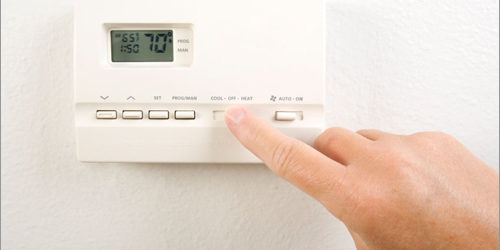 As the main control panel for your HVAC system, you come to rely on your thermostat to keep your home at a comfortable temperature. And, most of the time, it will do just that. So, it can be rather alarming to head to your thermostat and find that the screen is blank. If your thermostat is currently displaying no information on its screen, there are a few potential problems to consider. Explore the article below to see if you can solve this issue on your own or if professional help will be required.
 Does your home need a furnace? Whether you’re replacing an old furnace or you’re building a new home that will need a furnace, it is important that you choose the right one. The wrong furnace could leave your home feeling chilly, humid, or dry. You could also end up paying too much for heating energy.
  Are you in need of a residential propane supplier? If you have a propane furnace or if any other appliances in your home use propane, you must have a propane tank somewhere on your property. That tank, whatever the size, can only hold a certain amount of propane before needing to be refilled. Whether you’re a new propane customer or you’re thinking of switching suppliers, you may be wondering what to look for in a propane supplier. Here are the most important things to consider.
 The last thing you want to experience is a broken furnace on a cold winter day or night. Sometimes furnaces break down without warning, but in many cases there are signs that indicate your furnace may not be working properly.